
Solar panels can protect and even enhance your home equity in the UK, particularly when financial pressures threaten your property security. For homeowners facing mortgage difficulties or worried about repossession, a well-financed solar installation reduces monthly energy bills immediately, freeing up cash flow to meet mortgage payments while simultaneously increasing your property’s market value by an average of 2-4% according to recent UK property assessments.
The equity-building mechanism works on two fronts. First, solar panels deliver tangible utility savings that can reach £800-£1,200 annually for a typical three-bedroom home in 2026, depending on your energy usage and system size. This direct cost reduction strengthens your ability to service existing debts and maintain mortgage commitments. Second, solar installations have become a sought-after feature in the UK property market, with energy-efficient homes commanding premium prices as buyers increasingly prioritize running costs and environmental credentials.
However, the financing route matters enormously for homeowners in vulnerable positions. Outright purchase or approved loan schemes preserve your equity position, while certain solar leasing arrangements or power purchase agreements can complicate matters if they place charges against your property. Understanding which financing structures work with, rather than against, your equity protection goals is essential.
The broader context is encouraging. Government support through schemes like the Smart Export Guarantee allows you to sell surplus electricity back to the grid, creating a small income stream while the installation itself requires no planning permission in most cases. For homeowners concerned about equity after repossession solar panels represent both a defensive financial strategy and a forward-thinking investment in sustainable living.
Understanding Home Equity and Repossession Risk in the UK
Home equity represents the portion of your property you truly own, the difference between your home’s current market value and what you owe on your mortgage. If your home is worth £250,000 and your outstanding mortgage balance is £180,000, you have £70,000 in equity. This equity serves as both a financial cushion and a measure of your investment progress, making it one of your most valuable assets during uncertain times.
When mortgage payments fall behind, repossession risk increases dramatically. UK lenders typically begin formal proceedings after three to six months of arrears, though they’re required to demonstrate forbearance and explore alternatives before seeking a possession order. The threat becomes real when accumulated debt reaches a level where lenders believe normal payments cannot realistically resume. During 2026, rising living costs have pushed more homeowners into this precarious position, making equity protection strategies more crucial than ever.
- Home Equity
- The financial stake you own in your property, calculated as market value minus mortgage debt. It grows as you pay down the loan or as property values increase.
- Negative Equity
- A situation where your mortgage debt exceeds your home’s market value, leaving you owing more than the property is worth if sold.
- Mortgage Arrears
- Missed or late mortgage payments that accumulate as debt. Arrears trigger escalating lender actions, from reminder letters to formal repossession proceedings.
- Repossession Proceedings
- The legal process through which a lender seeks court permission to reclaim and sell a property to recover unpaid mortgage debt.
Protecting your equity matters because it determines what remains after a potential sale. If repossession occurs, the property gets sold (often below market value), the mortgage debt and legal costs are paid, and any remaining funds return to you. Higher equity means a better chance of walking away with some financial foundation rather than facing both homelessness and debt. Even more importantly, demonstrating you’re actively building equity and reducing expenses gives you stronger negotiating power with lenders, who generally prefer to avoid costly repossession when homeowners show genuine commitment to resolving arrears through sustainable means.
How Solar Panels Add Value to Your UK Property
Solar panels directly increase your property’s market value, typically adding £5,000 to £15,000 to a UK home’s sale price depending on system size and condition. This isn’t abstract, professional valuations from the Royal Institution of Chartered Surveyors (RICS) now routinely account for solar installations as permanent improvements, much like a conservatory or kitchen extension. When you’re facing financial pressure, this documented asset enhancement becomes evidence you can present to lenders, demonstrating that your property holds greater value than before the installation.
The equity gain works through two channels. First, the physical asset: solar panels and associated equipment become part of your property’s fabric, immediately boosting its worth. Second, the income stream: Energy Performance Certificate (EPC) ratings improve with solar, often jumping from a C to an A or B rating. Properties with higher EPC ratings command premium prices in the UK market, research from estate agents consistently shows that A-rated homes sell for 3-7% more than equivalent D-rated properties. This premium translates directly into measurable equity you can point to in any negotiation.
Proper installation documentation matters enormously here. MCS certification, the UK standard for renewable installations, provides official proof that your system meets quality benchmarks and can feed into the grid. Keep all paperwork: installation certificates, warranties, planning permissions if required for roof edge placement and any Building Control sign-off. These documents demonstrate to mortgage lenders, solicitors and courts that your solar installation is a legitimate, compliant asset rather than a liability.
When presenting your case to a lender during arrears discussions, an independent property valuation that includes your solar system strengthens your position. It shows you’ve actively invested in maintaining and improving the asset they hold security over, rather than letting the property deteriorate. Some homeowners obtain formal valuations specifically to demonstrate this equity increase, particularly when negotiating revised mortgage terms or seeking to remortgage with a new lender willing to consider the enhanced property value.
Reducing Monthly Expenses: Solar Energy as Financial Protection
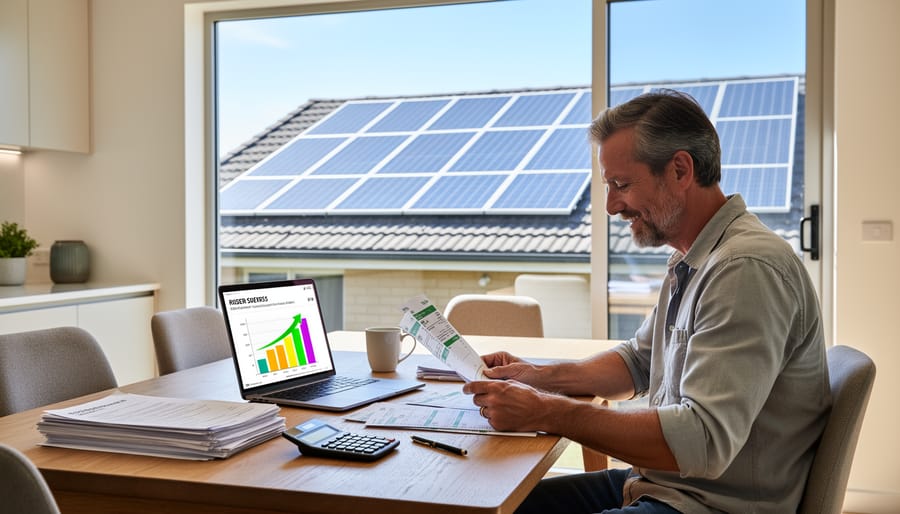
Solar panels deliver immediate financial relief by slashing electricity bills, often by 50 to 70 percent for UK households with suitable roof space and orientation. That monthly saving translates directly into freed-up cash flow, which homeowners facing mortgage arrears can redirect toward catching up on payments or building a buffer against future shortfalls. When every pound matters, cutting a £150 monthly electricity bill down to £50 creates £100 of breathing room that can make the difference between keeping current and falling further behind.
The financial protection extends beyond simple cost reduction. Solar energy creates predictable, stable expenses in an environment where grid electricity prices have proven volatile. UK energy costs spiked dramatically in recent years, and while they have moderated, the underlying uncertainty remains. With solar panels generating power at a fixed, known cost, essentially zero once the system is installed, you gain control over a significant household expense that previously fluctuated with market conditions and supplier price changes. This predictability helps you budget accurately and plan mortgage payments with confidence, knowing your energy costs won’t suddenly jump and derail your financial recovery.
The savings compound throughout the year, including periods when energy use typically rises. Even in darker months, well-designed systems continue generating power, helping you save energy in winter when heating and lighting demands increase. For households with someone working from home the daytime generation aligns perfectly with daytime consumption, laptops, lighting, heating, maximizing the proportion of solar electricity used directly rather than exported to the grid at lower rates.
Many homeowners report that solar savings allowed them to clear arrears within months rather than years. The cumulative effect, £1,200 to £1,800 annually for an average system, provides genuine financial margin. That margin can cover solicitor fees for negotiating with lenders, fund other essential repairs that protect property value, or simply reduce the stress that comes with juggling multiple financial pressures. Solar energy doesn’t solve every financial challenge, but it addresses one of the largest household expenses and does so reliably, creating space to tackle mortgage difficulties before they escalate to repossession proceedings.
Financing Solar Installations Without Jeopardizing Your Equity
When you’re already facing financial strain, the last thing you need is a solar installation that deepens your debt burden. The good news: several financing routes exist that can get panels on your roof without further compromising your home equity or worsening your position with lenders.
Government Grants and Support Schemes
Start by exploring non-repayable funding. While the UK’s Feed-in Tariff closed in 2019, the Smart Export Guarantee (SEG) pays you for surplus energy you generate, creating an immediate income stream rather than upfront costs. Check whether your local council offers green home improvement grants, some authorities provide targeted support for energy efficiency upgrades that include solar installations. The Energy Company Obligation (ECO4) scheme, running through 2026, helps low-income and vulnerable households access free or heavily subsidized renewables, which means zero impact on your equity if you qualify.
Interest-Free and Green Loans
Several lenders now offer green improvement loans with favorable terms specifically for renewable energy. These differ from traditional secured loans because they’re often unsecured or have flexible repayment schedules that recognize your situation. The key advantage: they don’t create an additional charge against your property that could complicate repossession proceedings. Some credit unions also provide “eco loans” with reduced rates for members facing hardship, treating solar as an investment that improves your financial outlook rather than a liability.
| Financing Method | Impact on Equity | Suitability for At-Risk Homeowners |
|---|---|---|
| Government grants (ECO4, council schemes) | None, no repayment required | Excellent if you qualify; no debt burden |
| Unsecured green loans | Minimal, no charge on property | Good; manageable payments without equity risk |
| Pay-as-you-save plans | None initially; savings offset costs | Very good; aligns payments with bill reductions |
| Secured solar loans/second mortgages | High, creates additional charge | Poor; increases repossession risk |
Pay-As-You-Save and Community Schemes
Some installers offer payment plans where your monthly installment roughly equals your energy bill savings, meaning no net increase in household expenses. This “bill swap” approach preserves your cash flow while you build equity through the solar asset itself. Community solar cooperatives sometimes provide pooled financing arrangements with gentler terms than commercial lenders, recognizing that helping you stay in your home benefits the whole neighborhood.
What to Avoid
Steer clear of second mortgages or secured loans that place another charge on your property, these compound your risk during repossession proceedings and give more creditors a claim on your home. Similarly, avoid long-term personal loans with punitive default clauses that could trigger further financial distress. If you’re already using your solar system to charge an EV ensure any financing accounts for that total household saving rather than underestimating the benefit.
The principle is simple: choose financing that either creates no additional debt or structures repayment around the savings you’ll actually realize, keeping your equity intact while you work toward financial stability.
Battery Storage: Extra Protection and Independence
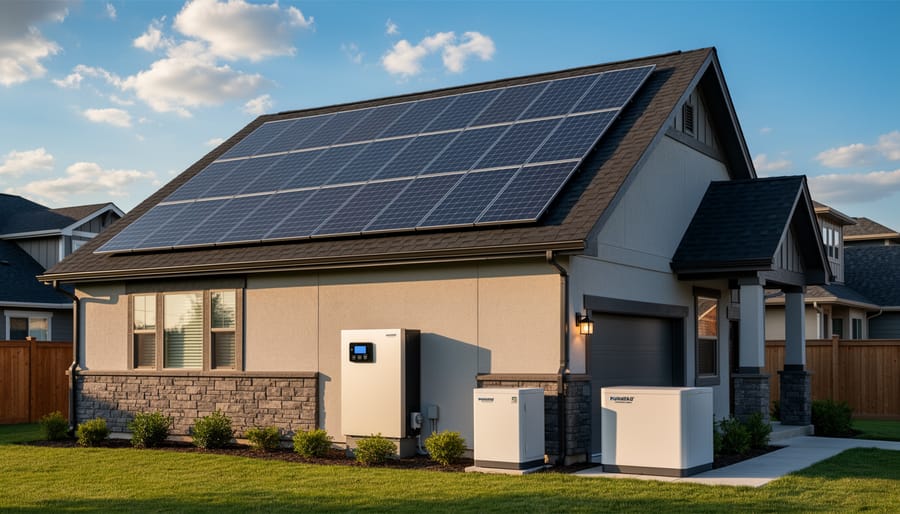
Adding a battery storage system to your solar installation takes financial protection a significant step further. While solar panels generate electricity during daylight hours, batteries store excess energy for use when the sun isn’t shining, typically evening hours when household consumption peaks and grid electricity costs the most. This shift away from expensive peak-rate power creates deeper monthly savings that can make the difference in meeting mortgage obligations.
Battery storage delivers three distinct advantages for homeowners under financial pressure. First, it maximizes the value of every kilowatt your panels produce by eliminating waste, rather than exporting surplus energy to the grid for minimal compensation, you’re using it yourself during high-cost periods. Second, batteries provide backup power during grid outages, protecting refrigerated food, heating systems, and essential appliances that would otherwise cost money to replace or repair. Third, they reduce your reliance on energy suppliers whose prices remain unpredictable, giving you genuine control over a major household expense at a time when stability matters most.
Modern battery systems are increasingly affordable, with prices dropping considerably since 2023 and various financing options available that don’t require upfront capital. Some UK suppliers offer batteries on payment plans that cost less monthly than the savings they generate, meaning immediate positive cash flow rather than delayed benefits. For homes in areas with occasional winter weather challenges, proper maintenance helps systems perform reliably; knowing how to keep snow off panels ensures consistent charging even during colder months.
The independence batteries provide isn’t just about energy, it’s about reclaiming financial breathing room when every pound counts toward keeping your home.
Legal Considerations: Solar Assets During Repossession Proceedings
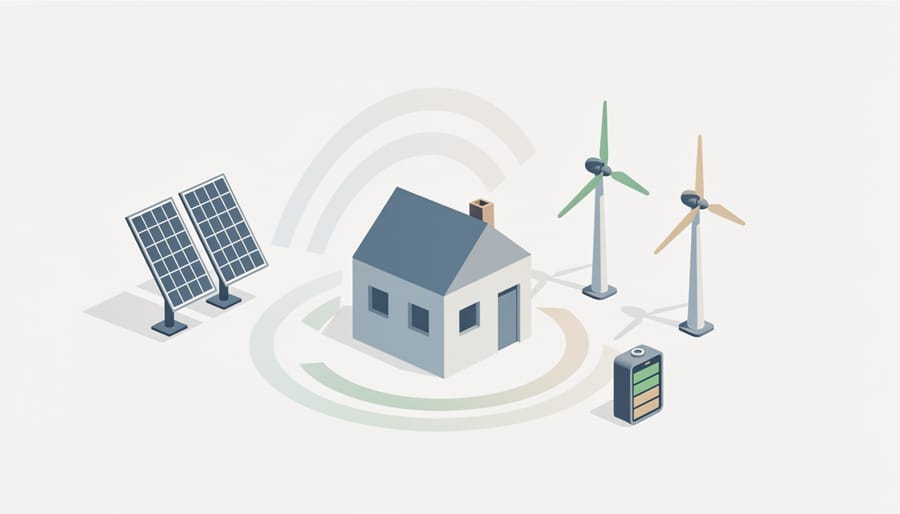
When repossession proceedings begin in the UK, understanding how your solar installation is legally classified becomes crucial to protecting any equity you’ve built. Solar panels are typically considered “fixtures” rather than removable personal property, meaning they’re legally part of your home’s structure and transfer with the property during a sale. This classification works in your favour, the value your solar system adds to your property remains counted within your total home equity during valuation.
However, ownership becomes more complex if you financed your solar panels through certain arrangements. Systems purchased with a standard secured loan against your property are straightforward: you own them, and they form part of your home’s asset value. The complication arises with solar leases or power purchase agreements (PPAs), where a third-party company technically owns the panels. In repossession scenarios, these agreements must be disclosed to lenders and potential buyers, and they can affect the property’s marketability since buyers must assume the contract.
If you financed panels through an unsecured loan or a specific solar finance product, you own the equipment outright once installed, which strengthens your position. Courts and lenders conducting property valuations for repossession must account for improvements like solar installations when calculating total equity. This means documented solar value, backed by certificates, invoices, and professional assessments, can increase the recoverable equity that might reduce your debt after a forced sale or provide leverage in negotiations.
When facing repossession, proactively providing lenders with evidence of your solar system’s value, energy performance certificates, and installation documentation demonstrates the enhanced property worth. Some homeowners have successfully negotiated repayment arrangements by showing how reduced energy costs from solar improve their ability to meet modified mortgage terms. Legal advice specific to your financing structure is essential, but remember: properly documented solar installations represent real, measurable equity that courts and lenders cannot simply ignore during proceedings.
Community and Support: Resources for UK Homeowners
UK homeowners facing financial hardship while considering solar investments aren’t alone, several organizations and programs provide practical support tailored to your situation. These resources can help you access funding, understand your options, and connect with communities who’ve navigated similar challenges.
The Energy Saving Trust offers free, impartial advice on renewable energy installations, including guidance on grants and financing schemes available across England, Wales, Scotland, and Northern Ireland. Citizens Advice provides comprehensive information about debt management, mortgage arrears, and how energy efficiency improvements might fit into your financial recovery plan. StepChange Debt Charity offers specialist advice for homeowners in arrears, helping you understand how investments like solar panels could complement a broader debt solution strategy.
Several programs specifically support homeowners exploring solar during financial difficulty:
- Local Authority Discretionary Assistance, some councils offer grants or interest-free loans for energy efficiency improvements to vulnerable households
- Home Upgrade Grant (England), provides funding for low-income homeowners to install renewable energy systems
- Warmer Homes Scotland, offers fully-funded renewables for eligible homeowners facing fuel poverty
- Nest (Wales), provides free energy efficiency measures and advice for households on certain benefits
- Community energy cooperatives, local groups that facilitate shared solar projects and peer support networks
Many solar installers now partner with specialist finance providers who understand challenging credit situations, offering flexible payment plans that account for your circumstances. The Microgeneration Certification Scheme maintains a database of accredited installers committed to transparent pricing and quality standards, helping you avoid predatory contracts when you’re most vulnerable.
Community forums like MoneySavingExpert’s renewable energy board connect you with homeowners who’ve successfully installed solar while managing financial pressure, sharing real experiences about what worked and which schemes delivered genuine value. These peer networks often surface local opportunities and installer recommendations that generic searches miss.
Solar energy offers UK homeowners facing financial difficulty a dual benefit that’s hard to ignore: immediate relief through reduced monthly expenses and tangible asset value that protects your home equity. Installing solar panels isn’t just about embracing renewable energy, it’s a practical financial strategy that can make the difference between losing your home and keeping it.
The electricity savings start from day one, freeing up funds that can go straight toward mortgage arrears. Meanwhile, your property gains documented value that lenders and courts recognise during repossession proceedings. This isn’t a distant theoretical benefit. It’s real money saved every month and real equity added to your home’s worth.
What makes solar particularly valuable in 2026 is the combination of mature technology, accessible financing options that don’t burden distressed homeowners, and growing recognition from financial institutions of solar installations as legitimate assets. You’re not just buying panels, you’re investing in energy independence that pays dividends through lower bills and increased property value.
If you’re struggling with mortgage payments, solar energy deserves consideration as part of your financial recovery plan. It won’t solve every problem overnight, but it creates breathing room in your budget and builds equity that strengthens your negotiating position. Combined with battery storage and support from UK community resources, solar represents a genuinely optimistic path forward, one where innovation helps preserve home ownership rather than remain out of reach during difficult times.