
Paint protection film is a transparent, self-healing polyurethane layer applied to vehicle surfaces to shield paint from physical damage and environmental wear. For drivers who regularly travel unsealed roads, PPF offers targeted defense against the relentless assault of airborne dust, flying grit, and extreme heat that accelerates paint degradation far faster than sealed highway conditions.
Unsealed roads present a unique challenge for vehicle preservation. The constant barrage of small stones and abrasive particles creates micro-scratches and chips that compromise your vehicle’s finish, while fine dust works its way into every crevice. Add intense heat, particularly in regions like Arizona where summer temperatures regularly exceed 110°F, and you’re looking at paint oxidation, fading, and clear coat failure within just a few years.
This matters beyond aesthetics. Maintaining your vehicle’s protective paint layer extends its usable life, reducing the need for premature replacement and the substantial environmental footprint that comes with manufacturing a new vehicle. Whether you drive an EV or a conventional car, protecting your investment aligns with smart resource conservation.
This article explores exactly how paint protection film stands up to unsealed road conditions. We’ll break down the specific mechanisms that address dust infiltration, grit impact, and heat damage, examine coverage strategies for high-exposure areas, and provide practical maintenance guidance to maximize performance of PPF in Brisbane and other harsh environments. You’ll also learn what to expect in terms of durability and whether the investment makes sense for your driving conditions, particularly if you’ve already committed to sustainability choices like solar at home.
What Paint Protection Film Is
Paint protection film is a transparent, durable coating made from thermoplastic urethane that bonds to your vehicle’s painted surfaces. Think of it as an invisible shield, a thin, flexible layer designed to take the beating that would otherwise damage your car’s factory finish.
The film typically measures between 6 and 10 mils thick (a mil is one-thousandth of an inch), making it substantially thicker than a human hair but thin enough to remain virtually invisible once professionally installed. This thickness gives PPF its protective strength while maintaining the appearance of your vehicle’s original paint color and finish.
- Thermoplastic Urethane
- A flexible, durable polymer material that forms the base of PPF, combining rubber-like elasticity with the toughness of hard plastic. This composition allows the film to absorb impacts and resist tearing while conforming to complex vehicle curves.
- Self-Healing Technology
- A property of quality PPF that allows minor scratches and swirl marks to disappear when exposed to heat, as the thermoplastic material returns to its original smooth state. This happens naturally in warm climates or can be activated with warm water or sunlight.
- Mil Thickness
- The measurement of PPF depth in thousandths of an inch, with most automotive films ranging from 6 to 10 mils. Thicker films offer more protection but can be harder to apply on intricate body contours.
- Clear Bra
- A common term for paint protection film, originally referring to partial coverage on high-impact areas like the hood and front bumper. The name comes from its resemblance to a protective garment for your vehicle’s front end.
Unlike traditional wax that sits on the surface and wears off within weeks, or ceramic coatings that create a hard chemical bond but remain only microns thick, PPF provides a substantial physical barrier. Wax offers minimal impact protection and requires constant reapplication. Ceramic coatings excel at repelling water and contaminants but can’t absorb rock chips or abrasion the way PPF does. PPF is the only option that combines transparency with genuine impact resistance and the ability to heal minor damage on its own.
How Paint Protection Film Works on Unsealed Roads
Barrier Against Dust and Grit Damage
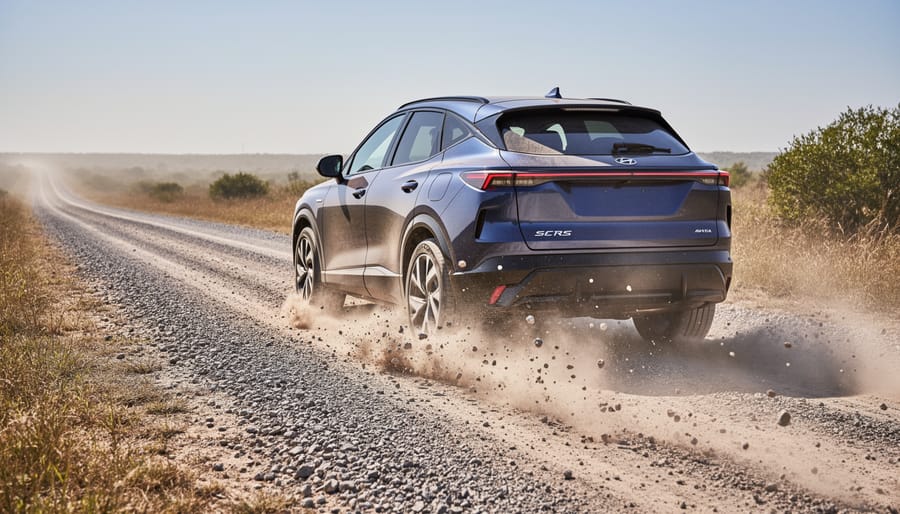
On unsealed roads, every kilometre throws a barrage of fine dust and sharp grit particles at your vehicle’s paintwork. Paint protection film acts as a dedicated shield, absorbing the impacts that would otherwise chip, scratch, and gradually wear down the factory finish.
The film’s urethane composition is designed to be tougher than automotive paint but softer than the particles striking it. When a piece of gravel hits the bonnet or a cloud of dust scours the door panels, the PPF takes the damage instead of the paint beneath. This sacrificial layer deforms slightly on impact, dispersing the energy that would create a chip or gouge in bare paint.
Over time, unprotected vehicles on dusty roads accumulate thousands of microscopic scratches that dull the paint’s gloss and create surface roughness where dirt embeds itself. PPF prevents this cumulative abrasion. Even when the film itself shows wear marks after months of exposure, it can often be replaced without touching the pristine paint underneath, something impossible once the original clearcoat is compromised. The barrier also blocks moisture and contaminants that accelerate oxidation, keeping the metal surface beneath protected from the corrosive effects of dust mixed with humidity.
Heat Resistance and UV Protection
Quality paint protection film is engineered to handle the thermal extremes that unsealed road environments demand. In Arizona and similar desert climates where surface temperatures routinely exceed 160°F and direct sunlight bombards vehicles for ten-plus hours daily, inferior coatings crack, yellow, or peel away within months. Premium PPF formulations withstand sustained heat without degrading because the urethane matrix remains stable across a wide temperature range, typically from -40°F to 200°F.
The film’s UV-blocking properties prevent the sun from breaking down the chemical bonds in your vehicle’s paint. Unprotected clear coat oxidizes under relentless UV exposure, causing that chalky, faded appearance common on older vehicles in hot climates. PPF absorbs or reflects UV radiation before it reaches the paint layer, maintaining the original color depth and gloss.
Clarity retention matters just as much as protection. Cheap films develop a milky haze or yellowing when heat-cycled repeatedly. Quality products incorporate UV stabilizers throughout the film thickness, not just a surface treatment. This means the transparency you see at installation persists years later, even after countless heating and cooling cycles that would compromise lesser materials.
Self-Healing in High-Temperature Environments
The self-healing thermoplastic composition of PPF offers a distinct advantage in Arizona’s relentless heat. When temperatures climb, especially during summer months when vehicle surfaces routinely exceed 140°F, the urethane material becomes pliable enough to reform itself. Minor scratches and swirl marks from dust abrasion simply disappear as the molecular structure flows back together. This isn’t marketing hype; it’s physics working in your favor. A vehicle parked in direct sunlight naturally reaches the threshold temperature needed to activate this property, meaning the film repairs itself without any intervention. For cars regularly exposed to dusty conditions where light scratches accumulate daily, this continuous self-repair extends the film’s effective lifespan and maintains optical clarity without the buffing and polishing that traditional paint would require.
Types of Paint Protection Film and Coverage Options
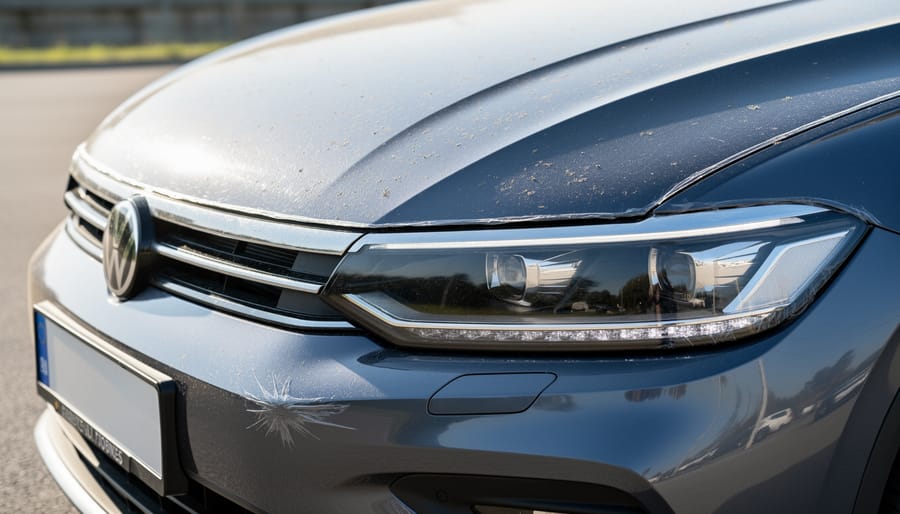
Paint protection film isn’t one-size-fits-all. Manufacturers produce several tiers of film with distinct performance characteristics, and you can choose how much of your vehicle to cover based on your budget and exposure level.
Film Quality Tiers
Entry-level PPF typically offers 3-5 mil thickness with basic impact resistance and UV protection. These films handle everyday dust and minor grit but may yellow over time in intense sun exposure and lack advanced self-healing properties. They’re suitable for budget-conscious buyers who want some protection without premium costs.
Mid-range films step up to 6-8 mil thickness with improved clarity retention and enhanced self-healing capabilities. They resist discoloration better in high-heat environments and provide superior abrasion resistance against the constant sandblasting effect of unsealed roads. Most mainstream installers work with this tier, balancing cost and performance.
Premium PPF reaches 8-10 mil thickness and incorporates advanced hydrophobic coatings that shed dust more effectively. These films feature the most responsive self-healing properties, minor scratches disappear within hours in Arizona heat, and come with warranties extending 10 years or more. Top-tier options include stain resistance that prevents the film from absorbing dust-borne contaminants that can cause permanent discoloration.
Coverage Configurations
Partial coverage targets the highest-impact zones: front bumper, hood, fenders, side mirrors, door edges, and rocker panels. This approach protects the areas that catch the most gravel spray and dust accumulation while keeping costs manageable. For vehicles that split time between sealed and unsealed roads, partial coverage often provides adequate protection.
Full-front coverage extends protection across the entire front fascia, headlights, and up the hood to the windshield base, essentially everything that faces oncoming debris. This configuration suits vehicles that frequently travel unsealed roads at highway speeds.
Whole-vehicle wraps cover every painted surface, creating complete protection. While expensive, full wraps make sense for premium vehicles, fleet trucks operating exclusively in dusty conditions, or owners who plan long-term ownership in harsh environments. The investment pays dividends in maintained resale value and eliminated repainting costs.
Some installers now offer modular packages that combine full-front coverage with strategic partial coverage on doors and rear quarters, creating a practical middle ground for unsealed road conditions.
Where Paint Protection Film Makes the Most Difference
Vehicles on unsealed roads take the hardest hits in predictable zones. The front bumper and hood catch the bulk of flying gravel and dust, making them prime candidates for film coverage. These horizontal surfaces also bear the brunt of heat absorption, relevant for owners looking for every advantage to beat the heat in extreme climates.
High-priority areas for PPF protection include:
- Front bumper and lower grille openings
- Hood leading edge and center section
- Side mirrors (entire outer surface)
- Door edges, particularly where doors swing open into dusty environments
- Rocker panels below the doors
- Wheel arches and fender flares
- Headlight assemblies
- Door handle cups and recessed areas that trap grit
Side mirrors deserve special attention because they extend beyond the vehicle’s profile and catch debris from oncoming traffic on narrow unsealed tracks. Rocker panels accumulate relentless sandblasting from tires kicking up dust and small stones during every drive. Wheel arches face similar punishment, compounded by trapped moisture and mud that holds abrasive particles against the paint.
Door handle cups may seem minor, but they’re scratch magnets. Every entry and exit in dusty conditions means hands brushing grit against the paint, creating wear patterns that worsen over time. Headlights benefit from protection not just for cosmetic reasons but to maintain light output, pitted, clouded lenses reduce visibility on already challenging roads.
Many installers offer partial-coverage packages targeting these vulnerable zones, balancing protection with cost. Full-vehicle wraps provide maximum defense but represent a larger investment. For unsealed road environments, prioritizing the front third of the vehicle and high-contact areas delivers the most practical benefit per dollar spent.
Maintaining Paint Protection Film in Dusty, High-Heat Environments
Regular cleaning becomes non-negotiable when your vehicle accumulates a daily coating of fine dust from unsealed roads. The abrasive particles don’t just sit on the surface, they act like sandpaper during every wash if you’re not careful. Start by thoroughly rinsing the PPF with plenty of water before any contact washing. This pre-rinse removes loose dust and grit that could otherwise scratch the film during the wash process.
Use a pH-neutral car wash soap specifically designed for clear bra or paint protection film. Alkaline or acidic cleaners can degrade the film’s topcoat over time, reducing its self-healing properties and clarity. Wash in straight lines rather than circles, working from top to bottom, with a soft microfiber wash mitt. Replace the mitt frequently during the wash, dusty environments contaminate mitts quickly.
Skip automatic car washes with brushes or abrasive contact points. The combination of embedded grit in brushes and high pressure can lift edges or create micro-scratches that accumulate into visible haziness. Touchless washes are safer, but hand washing gives you control and lets you inspect the film regularly.
Heat works in your favor here. In Arizona’s summer temperatures, PPF naturally reaches the activation point for self-healing, allowing minor scratches from dust particles to disappear on their own. Park in direct sunlight after washing to accelerate this process.
Inspect edges monthly, especially along the front bumper and hood where dust accumulation is heaviest. Look for lifting, discoloration, or debris trapped under the film. Catching edge lifting early prevents moisture intrusion that can lead to bubbling or adhesive failure. In high-dust environments, quarterly professional inspections help maintain the film’s protective integrity through seasons of relentless grit exposure.
The Environmental Benefits of Paint Protection
Protecting your vehicle’s paint with PPF aligns with broader sustainability principles in ways that aren’t immediately obvious. By extending your vehicle’s functional lifespan, you reduce the demand for new car manufacturing, a process that consumes massive amounts of energy, raw materials, and water. Every additional year you keep a well-maintained vehicle on the road is a year you’re not contributing to the carbon footprint of mining metals, producing plastics, and transporting components across global supply chains.
The repainting process itself carries significant environmental costs. Traditional automotive paint involves volatile organic compounds that release harmful emissions during application and curing. A single quality respray can require multiple coats applied in energy-intensive spray booths operating at controlled temperatures. PPF eliminates or delays these interventions by taking the damage instead of your factory finish, functioning as a planet-friendly shield that preserves what already exists rather than requiring replacement.
This preservation mindset mirrors the resource conservation goals driving renewable energy adoption. Just as solar panels reduce reliance on extractive fuel sources, protecting existing assets reduces manufacturing waste streams. Vehicles that maintain their appearance and structural integrity command higher resale values, supporting a circular economy where well-maintained goods remain in productive use longer. In Arizona’s harsh unsealed road environment, where unprotected paint deteriorates rapidly, PPF becomes an investment in resource stewardship, choosing durability over disposability.
Common Questions About Paint Protection Film for Unsealed Roads
Drivers considering paint protection film for unsealed road use often face similar concerns about practicality, performance, and value. Understanding these common issues helps you make an informed decision about whether PPF suits your specific driving environment.
How long does PPF last on unsealed roads?
Quality PPF typically lasts 5-10 years even in harsh unsealed road conditions, though heavy dust and grit exposure may reduce this to 4-7 years depending on coverage area and maintenance. The film’s lifespan correlates directly with how well you clean and inspect it regularly.
Can PPF be applied over existing paint damage?
No, paint protection film should only be installed on properly prepared, undamaged surfaces. Applying it over chips, scratches, or oxidation traps those imperfections beneath the film and prevents proper adhesion.
Does PPF reduce vehicle cooling efficiency or trap heat?
Modern PPF doesn’t significantly affect heat dissipation or cooling system performance. The film is thin enough that it doesn’t insulate painted surfaces or interfere with airflow around the vehicle.
What’s the typical cost for PPF installation?
Professional installation ranges from $1,000-$3,000 for partial front-end coverage to $5,000-$8,000 for full-vehicle wraps in 2026. Prices vary based on vehicle size, film quality, and regional labor rates.
Self-installation remains technically possible but rarely advisable for unsealed road applications. The precision required to avoid dust contamination during application makes professional installation worth the investment, installers work in controlled environments and offer warranties that DIY attempts can’t match. A poorly installed film with trapped debris or bubbles won’t provide the continuous barrier that unsealed road conditions demand.
The upfront cost often raises concerns, but consider it against repainting expenses. A quality paint job on one damaged panel can run $800-$1,500, making comprehensive PPF coverage a sound preventive investment when you’re exposing your vehicle to abrasive conditions daily.
Paint protection film proves its worth where roads are toughest, unsealed surfaces where dust clouds, flying grit, and relentless heat test every vehicle daily. By creating a durable barrier against these specific challenges, PPF extends the life of your car’s finish and reduces the need for costly repaints or premature replacement. This isn’t just about aesthetics. Protecting your vehicle means fewer resources consumed in manufacturing replacement parts and less chemical-intensive refinishing work down the line.
The parallel to sustainable infrastructure is clear: whether you’re preserving a solar array or a pickup truck, protecting your investment reduces waste and conserves materials. Every year you add to your vehicle’s functional life is a year you’re not contributing to the resource demands of new vehicle production. In communities where unsealed roads are part of daily life, PPF transforms vehicle ownership from a constant maintenance battle into a manageable commitment.
For those who value both practical durability and environmental stewardship, paint protection film delivers measurable returns in harsh conditions while supporting the broader goal of making our resources last longer.